AV Workbox — Reference Tool
The reference I reach for when a show won't wait. Connectors, codecs, loudness standards, signal specs, and the calculators I actually use — every number traced back to primary manufacturer documentation, not a diagram someone copied off another diagram.
No login, no cloud round-trip, no ads in the middle of a lookup. It opens to what you need and stays out of the way.
01 — Reference
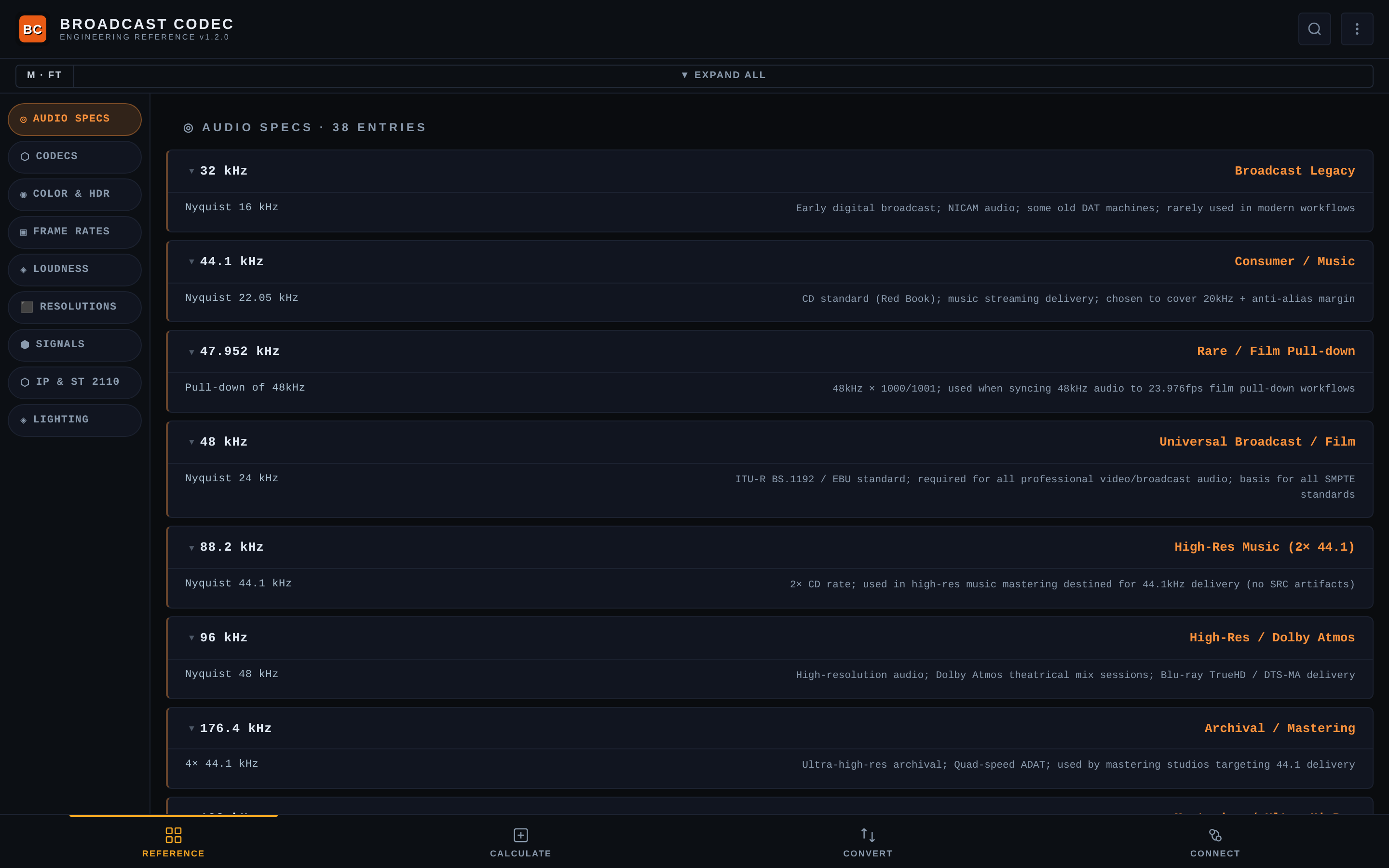
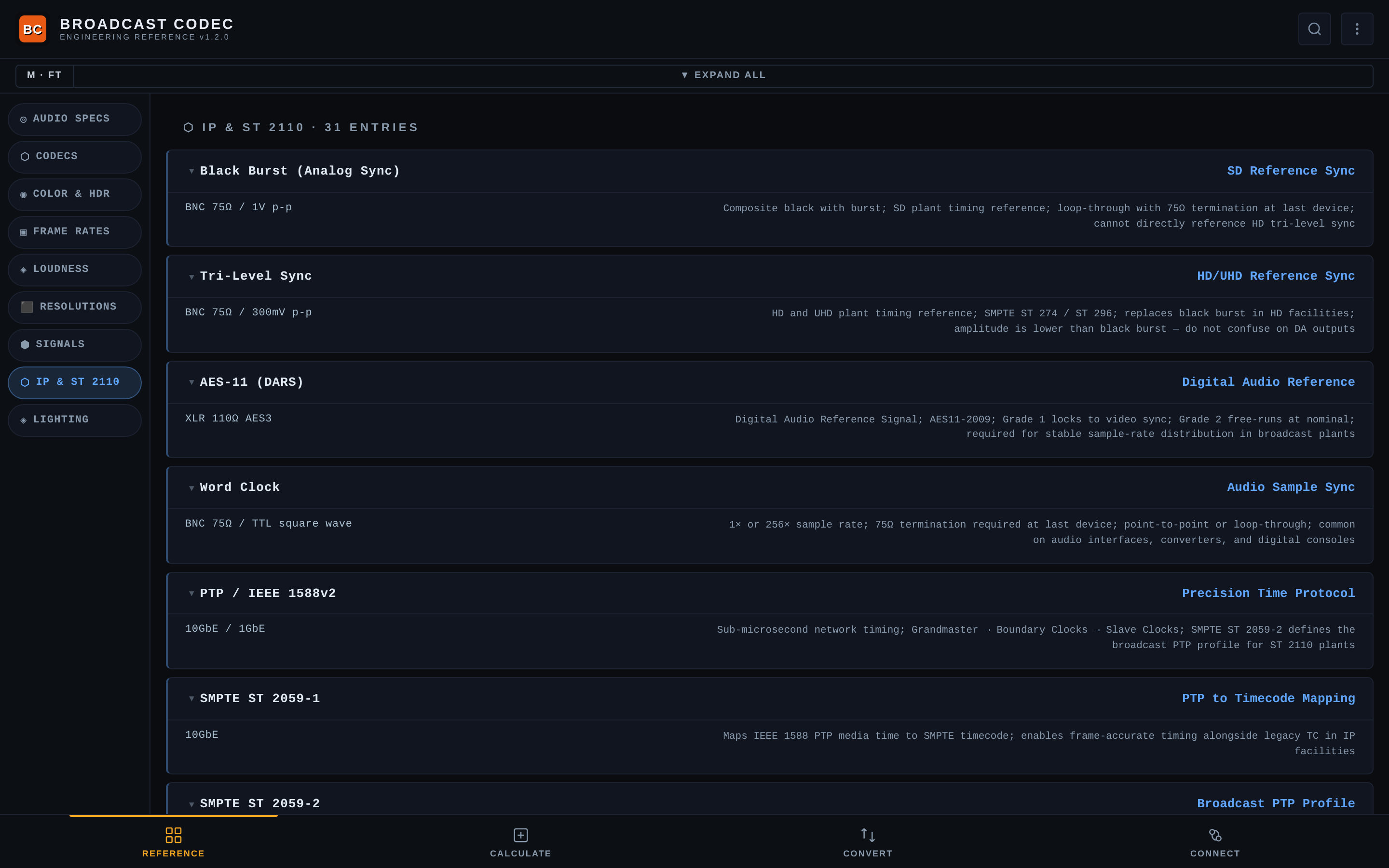
Audio specs, codecs, colour & HDR, frame rates, loudness targets, resolutions, signal levels, IP / ST 2110, lighting, and connector pinouts — grouped the way an engineer thinks about them, with a note on why each value is what it is.
02 — Calculate
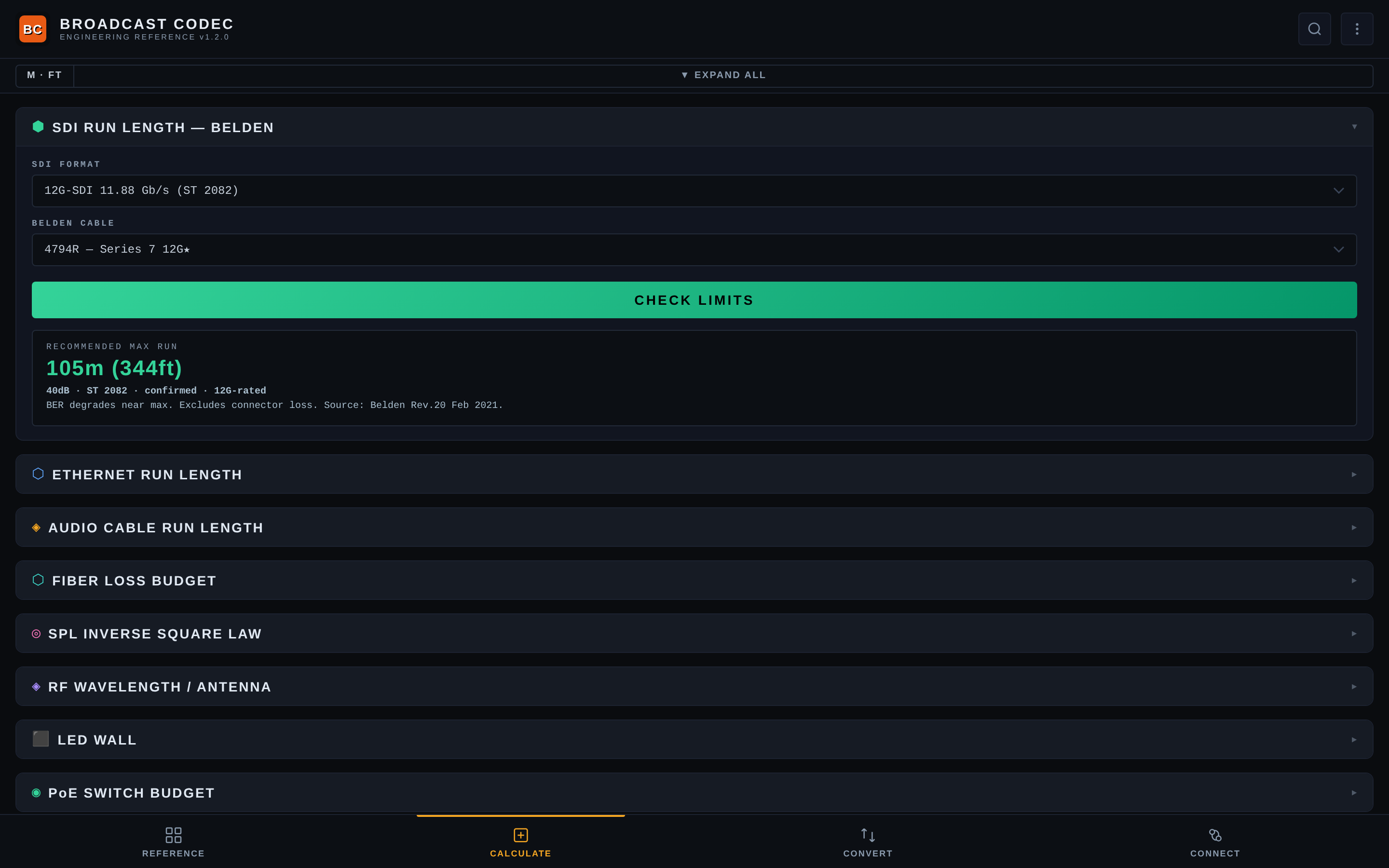
SDI cable-run limits, audio delay from distance and speed of sound, sample counts, dB ↔ ratio. The calculations you'd otherwise do on a phone calculator and second-guess.
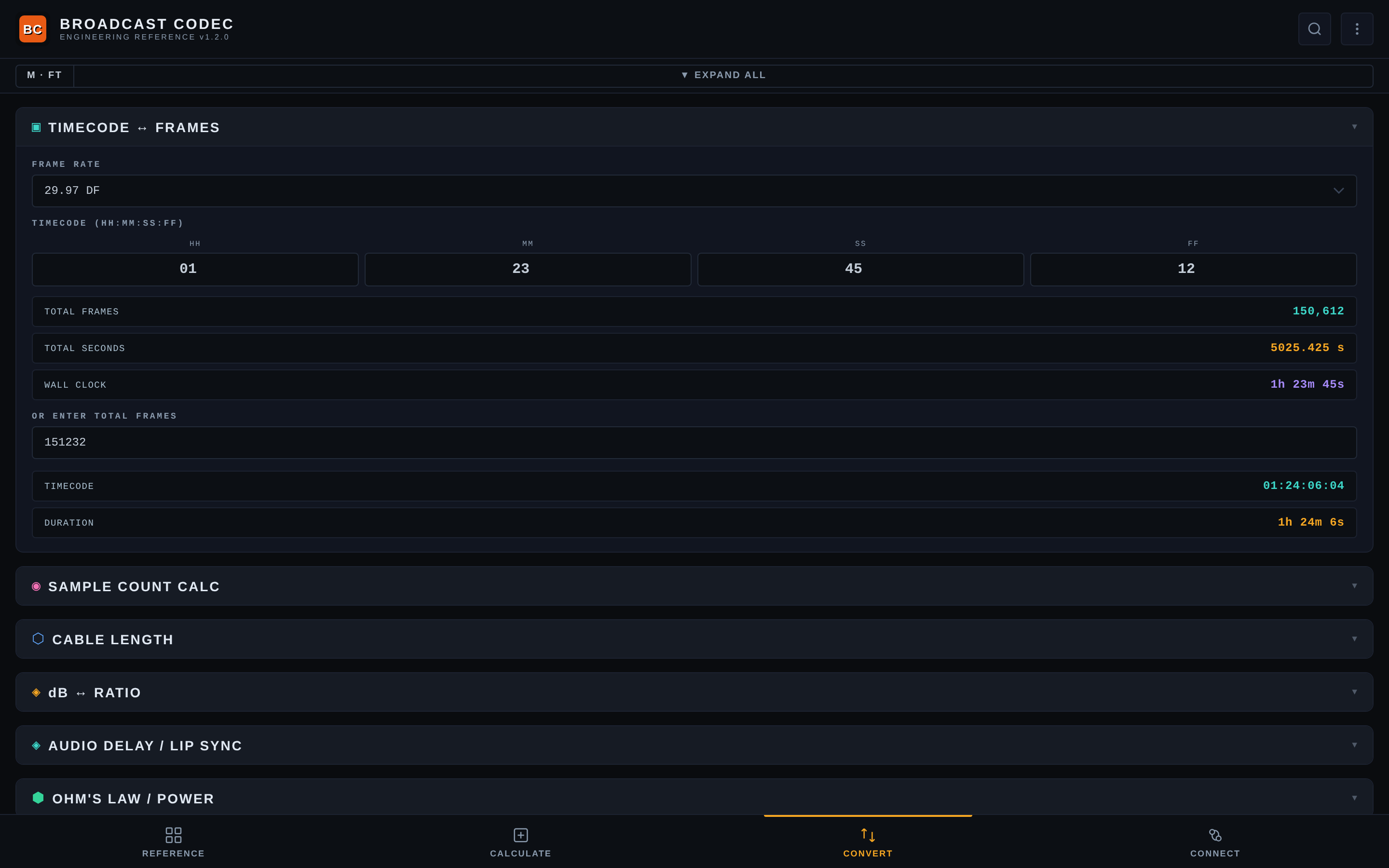
03 — Convert
Timecode ↔ frames at any rate, drop and non-drop, feet ↔ metres, and the other conversions that come up on a cable run or a spec sheet.
04 — Connect
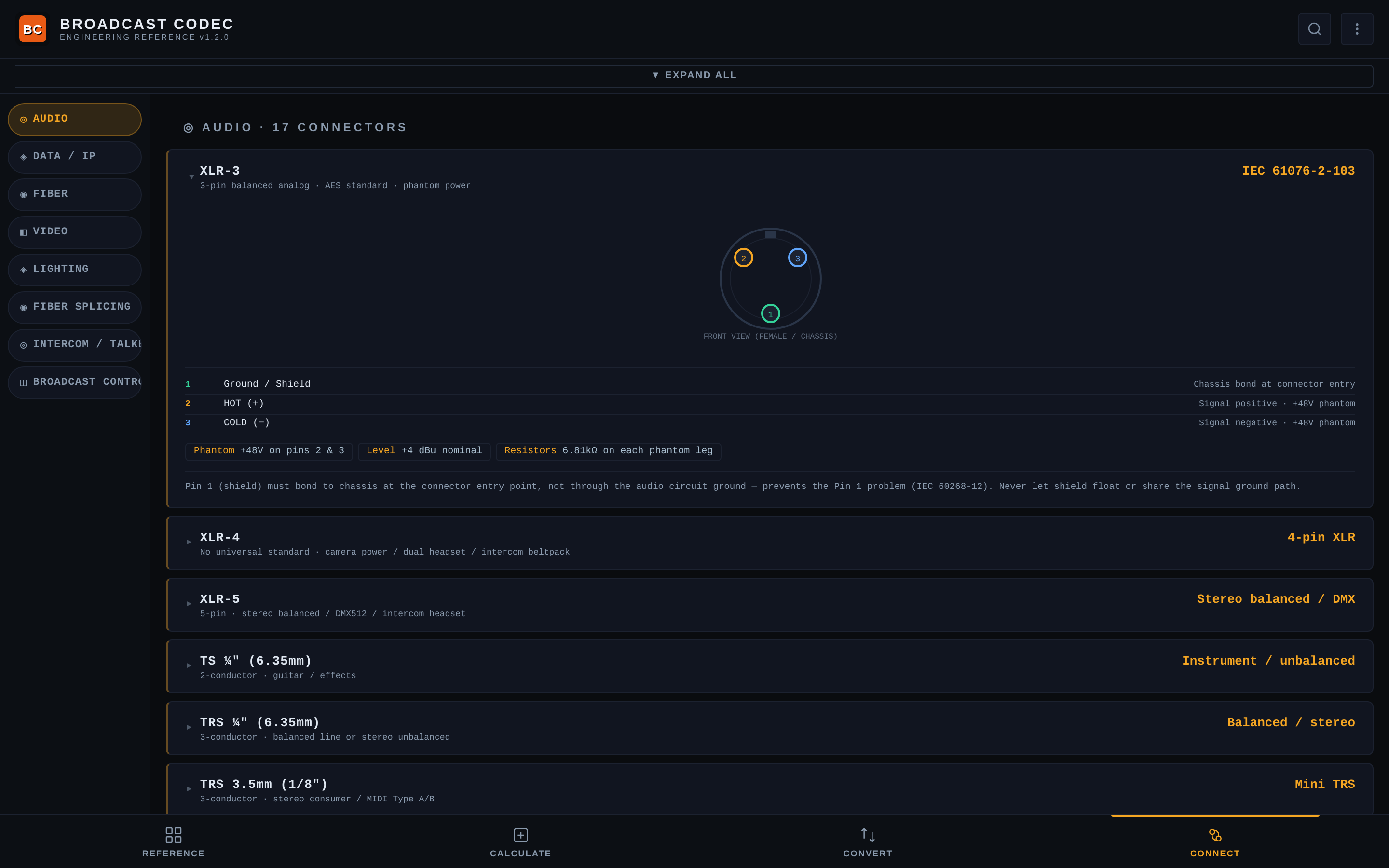
Connector faces drawn from manufacturer datasheets and dimensioned drawings — XLR, DT12/FK37, EDAC/SAC, Socapex, D-sub fanouts, RJ-family, and more — with the pin assignments and the caveats that come with them.
Growing most weeks. New connector categories and manufacturer references get added as the sourcing work clears.
Dark, dense, and legible on a dimmed phone at front-of-house. Same layout on iOS, macOS, Android, and Windows.
Reference Audio specs, with the reason each rate exists
Reference IP & SMPTE ST 2110 essentials
Calculate SDI run limits by rate and cable type
Connect Connector faces traced from datasheets
Convert Timecode ↔ frames, drop and non-drop
Most reference tools and PDFs in this corner are the same secondhand diagrams, copied and re-copied until nobody knows where a pin assignment came from. This one is built the other way around.
Pinouts, loudness targets, SDI and IP specs — each one checked against the manufacturer's own datasheet, the published standard, or a dimensioned drawing. Connector faces are traced from CAD geometry and datasheet drawings, not product photos.
There's a documented internal process for catching the entries most likely to be wrong — order-specific or assembly-specific wiring shown as if it were a fixed standard. Those get flagged and re-checked rather than left to sit.
When there's no authoritative source for something, the entry says so — plainly, in the note — instead of dressing a best guess up as verified fact. A reference you can't trust on the edge cases isn't much of a reference.
Manufacturer catalog references only appear in the app once that manufacturer has given permission. Until then the work happens off to the side, not in front of you.
$14.99 once. iOS, macOS, Android, Windows. No account, works offline.